Category Archives: Uncategorized

A Vision for a Very Different I-35 between Airport and 51st

by Sebastian Wren

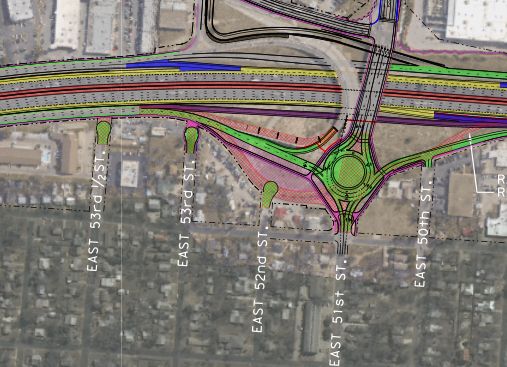
Texas Department of Transportation (TXDOT) has released a set of ideas that might improve traffic on and near I-35 near Northfield.  This new vision (not yet a plan, per se, but more of a set of ideas) features a redesign of the intersection of I-35 and 51st Street.  This redesigned intersection would feature a large roundabout, and many of the neighborhood streets would be blocked off to eliminate cut-through traffic.  (Specifically 52nd, 53rd, and 52 1/2 would be blocked — this has been a part of the Northfield Neighborhood Plan for over a decade.)

51st and I35 Plans

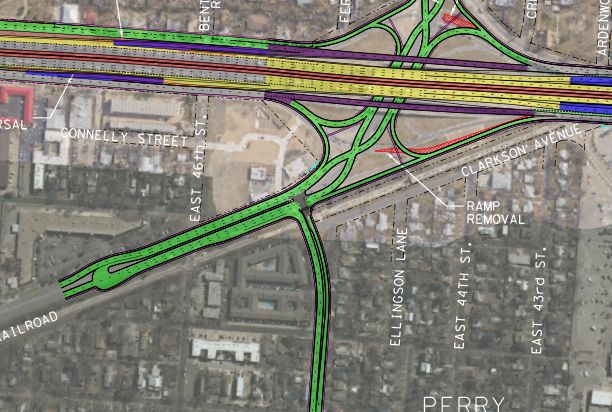
Additionally, on- and off-ramps would be removed around the intersection of I-35 and Airport Boulevard, and Airport would also be redesigned with a “Michigan Left Turn” at 45th and a “Diverging Diamond Interchange” under the freeway.

Airport and I35 Plans

As yet, this is only a vision that TXDOT is putting forward for consideration.  No funding has been allocated for this project, and it is unclear if a shovel will ever break ground, but it does reveal a willingness on the part of TXDOT to seriously improve all forms of traffic in a region that is currently neither safe nor convenient for any form of traffic.

Easy Tiger Bakery and Beer Garden Opening Nearby in 2015

Easy Tiger

The popular 6th Street bakery and beer garden, Easy Tiger, has only been open for a few years, but it is already exceeding the space it needs to meet demand.  They have been needing to dramatically increase their capacity for baked goods to meet commercial customer demand.

So, they have decided to expand in a big way in the old Lincoln Village Shopping Center (now called “The Linc”).  They have announced that by the end of next year, they will be opening a beer garden and bakery with:

  • Outdoor seating for 250 people
  • An outdoor stage for live music
  • Drive-through coffee
  • A dog park

They are hoping to create a beer garden destination for neighbors and ACC students from the near-by Highland campus.

City Council Candidate Greg Casar Responds to NNA Questions

District 4 candidate Greg Casar was gracious enough to provide responses to the questions asked of all candidates by the Northfield Neighborhood Association.  Our questions, and Mr. Casar’s responses are copied below.

NNA:  The city council lowered occupancy limits in an attempt to reduce the proliferation of so-called Stealth Dorms, but this reduction in occupancy limits will only be in place for 2 years. What would be your commitment to following through on that initiative to ensure the preservation of single-family homes into the future?

Casar:  I am committed to preserving Northfield’s unique character, and I’ll work diligently with our neighborhood to reduce the demolition of affordable homes in our area. I credit our neighborhood with bringing this issue to the forefront of the Council agenda, and I intend to make it a priority in my Council office. The current occupancy reduction is only a short-term policy attempting to deal with the long-standing problems in our current Land Development Code (LDC). Our current code too often encourages skirting neighborhood rules along with the demolition, rather than the preservation, of existing affordable homes. We need to ensure there is an appropriate mix of single family and multifamily dwelling units in our area to meet demand and keep prices affordable — I myself live in a multifamiy building in Northfield.

As a City Council member, I am committed to ensuring our LDC re-write process results in a LDC that minimizes loopholes, empowers neighborhoods to designate areas for responsible growth, and is reasonably understandable to everyday citizens — not just lawyers and development consultants. I’m committed to following through on initiatives brought forward by the neighborhood and the community to make sure that two years from now, development rules in Northfield and other high-demand areas preserve our family neighborhood character, our affordability, and the vibrancy and diversity that makes our area great.

NNA:  Austin housing prices have increased dramatically over the past 20 years, raising concerns about both affordability and property taxes. What efforts will you take as a city leader to improve housing opportunities in central Austin for people from economically diverse backgrounds. And what will you do to keep increasing property taxes from driving people out of their homes?

Casar:  There are things that we can do to make Austin a city whose prosperity is more widely shared, so that the very people who make our city great can be included in Austin’s future.

First, we need to push for tax relief for our residents. That means phasing in a homestead exemption to benefit our homeowners paired with an expansion of utility-bill relief and weatherization so that moderate-income homeowners, renters, and working class people can get the relief they need. I’m ready to launch the honest community-driven dialogue about new revenues and government efficiency so that we can responsibly provide more affordable living for those who need it most. We should not rush into taking steps that could cut social services, parks, and swimming pools for those living around Cameron or Lamar while providing benefits disproportionately west of Mopac. We also must closely examine major cost-drivers in our budgets, including subsidies for new development, maintenance and construction of infrastructure to suburban developments, and responsible staffing levels for public safety.

Second, our city should purchase underutilized land and require that future development of that land include family-friendly housing that’s affordable for everyday Austinites. We should also continue to support funding for housing the neediest in our community, because if we do not act, the Austin of tomorrow may not be the Austin we want to live in.

Third, we need to make sure there is enough housing in Austin for all of us— severe housing shortages result in increases in rents and taxes for everyone. Neighborhood voices, from Windsor Park to Northfield to NACA and everywhere in between, are critical for ensuring new housing is built where it respects current residents and the environment. We also need to pass anti-discrimination rules that will protect tenants’ civil rights to be housed.

Finally, we should hold large commercial interests accountable to pay their fair share of development costs, water bills, energy costs, and property taxes. And if that means we need to get state laws changed, then we need to fight to do just that. When granting major development rights to private enterprise, we should stand strong at the negotiating table and receive affordable housing and jobs with good wages in return. Austin doesn’t have a prosperity problem: we have a shared prosperity problem. My campaign is committed to making sure Austin’s economic engine benefits the quality of life for everyone, not just a chosen few. Austin will thrive if our people have a chance to thrive.

NNA:  The City of Austin started a process to improve Airport Boulevard, but there has been no progress in recent years. What would be your commitment to continuing that process?

Casar:  I’m committed to reengaging staff and the new Council around Airport Boulevard’s improvement. Especially considering ACC Highland’s grand opening, along with the passage of the ACC bonds, the City should commit to following through on its investments up and down Airport starting at I-35. There has been some debate about whether to delay changes to development rules on Airport in order to wait on CodeNext. I believe that our neighborhoods can lead the way, ahead of CodeNext, to be a model to the rest city—if we
are successful in improving Airport, we can show off how committed leaders can protect our iconic small businesses and neighborhoods, adapt to a changing city, and bring positive, progressive change to our area.

I’m excited about convening our community in District 4 and District 9 so that we can build the political constituency to move this initiative forward.

NNA:  What are the most important improvements and initiatives that you feel would benefit constituents in the Northfield Neighborhood?

Casar:  Allowing for an adequate amount of housing along the Lamar and Airport Blvd. corridors could help relieve pressure on Northfield properties facing demolition. I’m also committed to continuing a conversation with the University of Texas and our business community about accessible, affordable student housing: it’s important to me that our neighborhood remain diverse, with students, seniors, and families young and old living in close proximity. To achieve this, there must be adequate and affordable housing for students spread out across our city, not just in a few neighborhoods.

In addition, continued investment and expansion of transit lines along our major streets could increase foot traffic while reducing automobile traffic. As more exciting businesses appear on Airport, Lamar, and North Loop, we’ll have to work hard with the city on traffic mitigation, streetscapes, sidewalks, and other improvements to reduce automobile cut-throughs and address threats to our safety.

City Council District 4 Candidate Laura Pressley Answers NNA Questions

City Council candidate Laura Pressley was nice enough to respond thoughtfully to the questions that the Northfield Neighborhood Association has been posing to all District 4 and 9 candidates interested in representing our neighborhood.  Our questions and Dr. Pressley’s responses are below.


NNA:  The city council lowered occupancy limits in an attempt to reduce the proliferation of so-called Stealth Dorms, but this reduction in occupancy limits will only be in place for 2 years. What would be your commitment to following through on that initiative to ensure the preservation of single-family homes into the future?

Pressley: I am 100% committed to the preservation of single-family homes and will ensure we keep the occupancy limits in place. My work on the Austin Neighborhoods’ Council has included maintaining the integrity of our neighborhoods and the zoning that protects that. The root cause and reason why we have so many issues with multiple unrelated adults in a single residence is our affordability challenges. The way to improve our affordability is to stop subsidies to corporations and we can lower our utility rates and fees.

NNA:  Austin housing prices have increased dramatically over the past 20 years, raising concerns about both affordability and property taxes. What efforts will you take as a city leader to improve housing opportunities in central Austin for people from economically diverse backgrounds. And what will you do to keep increasing property taxes from driving people out of their homes?

Pressley:  I will lead the implementation of a 20% City of Austin Homestead Exemption, lower utility fees, and to pay for these reductions in budget revenue, we need to stop subsidies to corporations.

From a housing standpoint, there is an article that was done by The Austin Business Journal, that states the housing shortage is actually being driven by funding limitations. As a policy, the City Council can define new zone categories such as for properties for smaller homes in the range of 700-800 sq. ft. that includes requirements for parking on the property. Developers don’t build such housing stock due to the profit margins not being as large as larger homes, etc.  After WWII, several neighborhoods (Crestview, etc.) sprung up that were based on the idea of affordable homes for families that were smaller in size, etc. We should consider this model.

NNA:  The City of Austin started a process to improve Airport Boulevard, but there has been no progress in recent years. What would be your commitment to continuing that process?

Pressley:  There are some issues with Airport Blvd and the existing Neighborhood Plans as they relate to increased population density, parking requirements, and layout of Airport Blvd with proposed medians. Developers, businesses need to honor the Neighborhood plans.

NNA:  What are the most important improvements and initiatives that you feel would benefit constituents in the Northfield Neighborhood?

Pressley:  The main improvements I feel that would benefit Northfield is to address affordability with a 20% Homestead Exemption, reduced utility fees, stopping subsidies to corporations, protecting single-family housing zoning (which in turn will support schools in the area), and development that honors the Neighborhood Plans and parking requirements.

Evidence of the City’s Hogwash About Sidewalks

by Sebastian Wren

On several occasions, our neighborhood has spoken with City of Austin staff about making Chesterfield a safer place for pedestrians.  Ever since Epoch Coffee opened, hundreds of people walk along Chesterfield Avenue to and from the coffee shop just about every day, and it isn’t very safe at all.  People walking with their dogs or their children get stuck in very unsafe situations with cars that tend to go a little too fast along Chesterfield.

It’s awful.

Our fore-sighted neighbors who wrote the North Loop Neighborhood Plan recognized this as a problem more than a decade ago, long before Epoch Coffee opened, years before there was a Drink.Well, or a Tigress, or a Workhorse.  Long before there were scores of people walking along this street, our neighbors who wrote the neighborhood plan cited Chesterfield as a dangerous street in need of traffic calming and pedestrian amenities.  Specifically, they called for a sidewalk along Chesterfield on the West side of the street.

City staff have said repeatedly that is not possible — they claim it will mess up the “drainage” in the street.  (But of course, they can’t explain how on earth a sidewalk could mess up “drainage.”)  We have asked them to narrow the street (which would calm traffic) and put the sidewalk in the space the street currently occupies — their response was “not possible.”

When they tore up the street (twice!) to replace utilities, we asked them to install a sidewalk and make it safer for pedestrians.  Their response was “NOT POSSIBLE.”

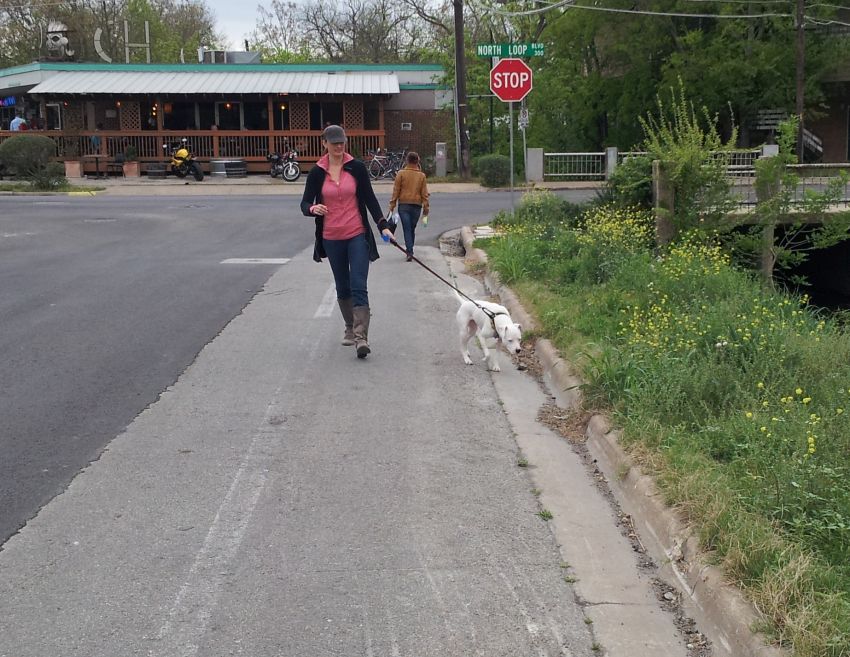
The best they could do to make pedestrians safer was to paint a stripe of paint along the road.  Yes… Paint… Like a strip of paint will save your child from getting hit by a car.  And by the way, the paint faded long ago…  The City of Austin is so dysfunctional, THIS is their idea of a sidewalk:

ThisIstheCOAIdeaOfASidewalk

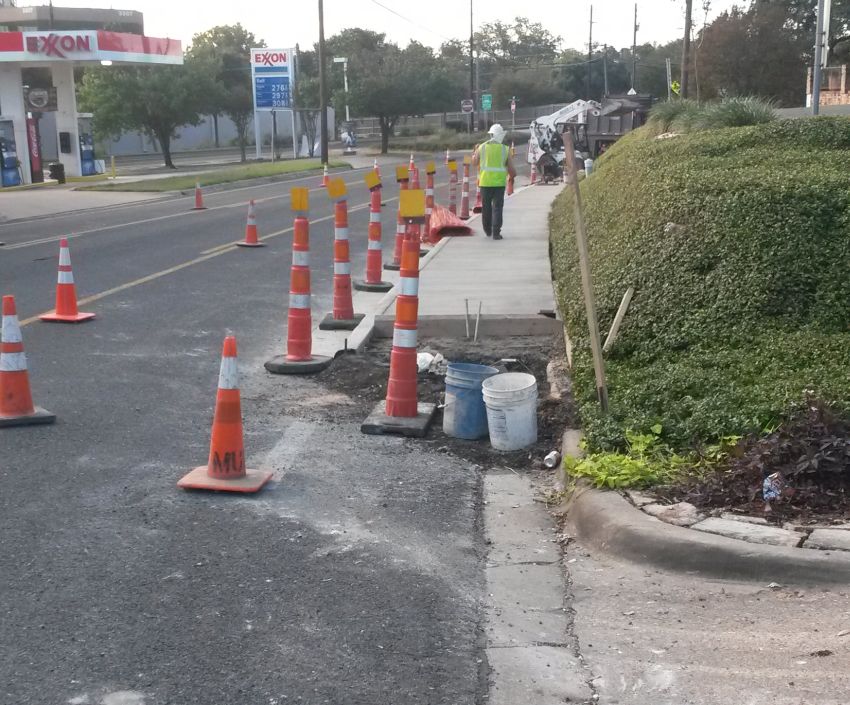
But all along, the city staff have clearly been lying to us, because the City of Austin certainly CAN install a sidewalk in the street.  It most definitely IS possible.  In fact, they’re in the process of doing it RIGHT NOW in Northwest Hills.  On Balcones Drive near 2222, construction is currently underway to convert the bike lanes into SIDEWALKS.

I ride my bike there a few times a week, and I don’t recall EVER seeing pedestrians walking along Balcones Drive, but I can assure you that if they did, it would not be safe.   Check it out:

FormerBikeLaneNewSidewalk

Look at that guy walking along that new sidewalk!  Doesn’t that look great!  Wouldn’t you LOVE to see that on CHESTERFIELD!?!?!?!?  I sure would!!

SO, all of these COA staff members who have been telling us for years that they can’t put a sidewalk on Chesterfield (you know… because of “drainage…”) need to explain to us why Chesterfield is so different from Balcones Drive.  There is PLENTY of room to narrow Chesterfield and add a sidewalk — a SAFE pathway for HUNDREDS of people who walk along that street regularly.

So why can’t they do it?

Taco Cabana is Getting New Neighbors

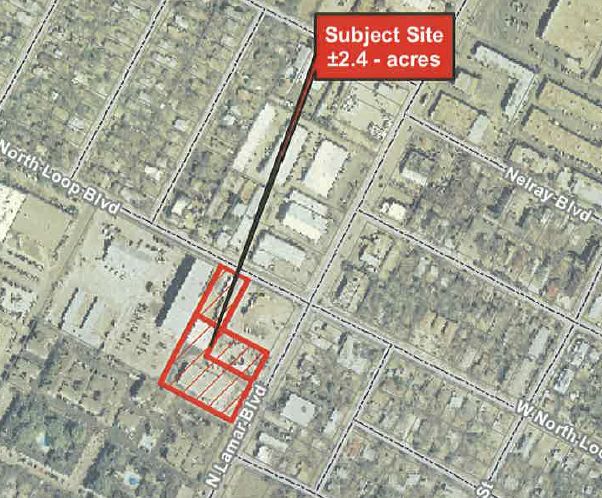
You may have noticed some demolition at the old Paisano Motors site across from Buck Moore Feed and Supply.  Soon ground-breaking will begin on another VMU structure that will cover the land to the south and to the west of Taco Cabana.

BigRedDogSite

Big Red Dog Engineering and Consulting has filed a site plan with the City of Austin for review.  The structure, when finished, will include 209 apartments, and well over 5,000 square feet of retail space on the first floor.

Big Red Dog has a track record of building large VMU projects in Austin, including Lamar Union on South Lamar (once and future home of Alamo Drafthouse Theater).  No specific details or images for this North Loop and Lamar project have been posted on their blog yet (http://www.bigreddog.com/), but we’ll keep an eye on it for updates.

Youngblood’s Fried Chicken — Coming Back to Life, and Coming to Airport Boulevard

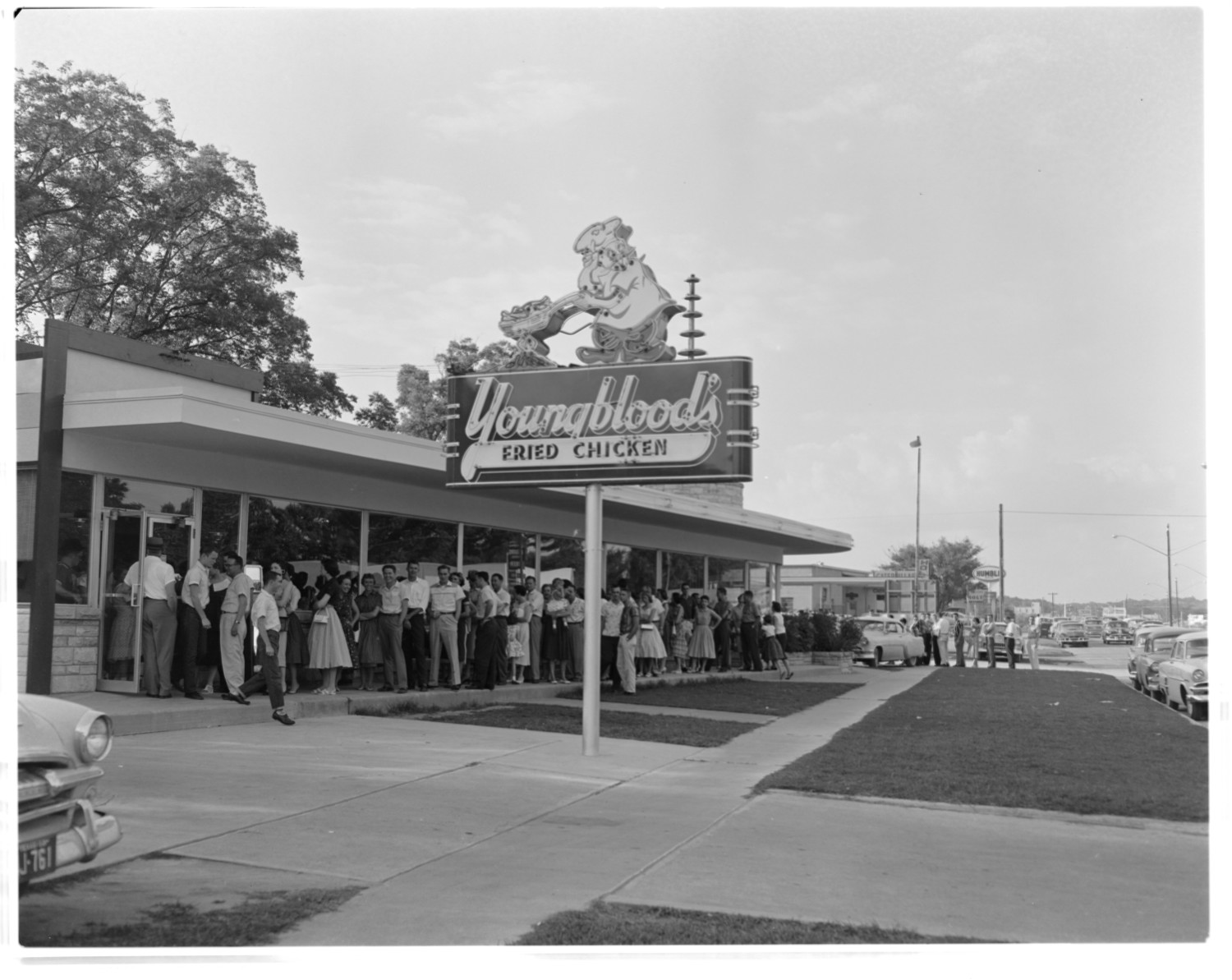
Texas old-timers might remember fondly the chain of fried-chicken restaurants called Youngblood’s.  They were all over Texas in their heyday, including one in south Austin.

YoungbloodsChicken

A few well-known chefs in Austin have decided to revive this much-loved chain — recreating the atmosphere as well as the original recipes.  And they have announced that their first location will be near Northfield.  No specific location has been announced, but the partners in this endeavor did say that they are planning to open the restaurant in 2015 on Airport Boulevard, west of I-35.

City Council District 9 Candidate Chris Riley Responds to NNA Questions

Councilmember Chris Riley has taken the time to provide some thoughtful responses to questions asked of all District 4 and 9 candidates by the Northfield Neighborhood Association.  Please read his responses below:

NNA:  The city council lowered occupancy limits in an attempt to reduce the proliferation of so-called Stealth Dorms, but this reduction in occupancy limits will only be in place for 2 years. What would be your commitment to following through on that initiative to ensure the preservation of single-family homes into the future?

Riley:  I helped lead the lowering of occupancy limits to stem the demolition of single-family homes in Northfield and other neighborhoods in the area. At all times, I have emphasized the need to keep working to address the underlying problem: the lack of housing options for students and others seeking to live affordably near the UT campus. If we’re not able to fully address that problem by the time two years have passed, I expect we’ll need to extend the occupancy limits. I’m fully committed to ensuring that Northfield retains its stock of single-family homes into the future.

NNA:  Austin housing prices have increased dramatically over the past 20 years, raising concerns about both affordability and property taxes.  What efforts will you take as a city leader to improve housing opportunities in central Austin for people from economically diverse backgrounds.  And what will you do to keep increasing property taxes from driving people out of their homes?

Riley:  I plan to keep working to provide a wide range of housing options in central Austin. I have sponsored resolutions aimed at supporting accessory dwelling units, micro-units, and tiny homes, all of which would tend to be more affordable than standard single-family homes. Accessory dwelling units have also proven helpful to many homeowners who have been able to generate a revenue stream to offset their property taxes.

A stronger supply of housing options would tend to keep appraisal increases in check. And we always need to strive to keep the property tax rate low. I also support doing what we can to keep all household expenses low, from transportation costs to utility bills. Making good use of all city property, including property held by the utilities, can be an important part of reducing the pressure on taxpayers and utility ratepayers

NNA:  The City of Austin started a process to improve Airport Boulevard, but there has been no progress in recent years. What would be your commitment to continuing that process?

Riley:  As the lead sponsor of the Airport Boulevard initiative, I’m fully committed to continuing the process. The Airport Boulevard Advisory Group has done great work, and the recommendations resulting from that process are currently being reviewed by the consultant team working on the overhaul of our Land Development Code.

The initiation of the Airport Boulevard project was based in part on the community’s interest in seeing how a form-based code could work in practice. The community still has that interest, and the need to get moving on a form-based code is more urgent than ever. I have been following up with the Opticos Team to make sure they’re prioritizing Airport Boulevard as an opportunity to demonstrate an effective form-based code as soon as possible.

I have also been working to promote the goals of the Airport Boulevard project through the ongoing redevelopment of Highland Mall and the 81-acre site on which it sits. In June I sponsored a resolution supporting a partnership with Austin Community College to foster an exemplary redevelopment effort, and I convened a meeting of City and ACC officials to discuss that partnership. The resolution also calls for further work regarding both the Highland Mall site and the Airport Boulevard Corridor. I look forward to getting a report on that work by the end of this year, and taking the next steps toward the improvements that have long been envisioned for this corridor.

NNA:  What are the most important improvements and initiatives that you feel would benefit constituents in the Northfield Neighborhood?

Riley:  Here’s my list of 10 improvements and initiatives that would benefit constituents in Northfield:

1.  The 2002 North Loop Neighborhood Plan sets out a great vision of a “vibrant, friendly and livable” neighborhood. The goals of the plan should be carried forward through the rewrite of the Land Development Code, and should be revisited periodically to make sure we’re staying on track.

2.  The Airport Blvd project offers the possibility of fulfilling a longtime neighborhood vision of transforming this corridor into a walkable, mixed-use boulevard full of great local businesses.

3. Capital improvements on Airport are recommended in the neighborhood plan, and have been planned in some detail in the Airport Boulevard project. Funding for these improvements should be included in the next bond election. In the meantime, I have been working with staff to identify alternative funding sources, and I’m hopeful that significant funding will be available soon.

4. A better sidewalk network would make the neighborhood more pedestrian-friendly.  A prioritized list of sidewalk needs is set out in Action 1.6 of the neighborhood plan.

5. Better bicycle facilities are needed in a number of places, including Airport Boulevard and 51 Street.

6. The parkland dedication ordinance needs to be updated so that future multifamily development in the area generates more than $650/unit for parks in the neighborhood.

7.  Northfield should have public spaces it can be proud of. The neighborhood plan envisions “attractive, pedestrian friendly public spaces in the neighborhood that foster public gathering,” such as pocket parks and plazas.

8.  The redevelopment of the Highland Mall site, including Highland Mall itself, should provide great nearby amenities for Northfield, including walkable streets, great shops and restaurants, and inviting green spaces.

9.  Better high-capacity transit, with more direct access to UT and Downtown, would be a great improvement for Northfield. The proposition on the ballot in November would be one positive way of addressing that; and if this proposition fails, we’ll need to regroup and find another way to address this need.

10. The rewrite of the Land Development Code offers opportunities for ensuring more positive redevelopment, and could be especially helpful for providing “missing middle” housing options that could buffer single-family areas from more intensely developed places like Airport Boulevard.
Kathie Tovo Responds to NNA Questions

Kathie Tovo, city council member candidate for District 9, was gracious enough to provide detailed and thoughtful responses to the questions given to her by the Northfield Neighborhood Association.  Her responses to each question are provided below:

NNA: The city council lowered occupancy limits in an attempt to reduce the proliferation of so-­‐called Stealth Dorms, but this reduction in occupancy limits will only be in place for 2 years. What would be your commitment to following through on that initiative to ensure the preservation of single‐family homes into the future?

Tovo:   When  the  ordinance  came  before  Council,  I  supported  Council  Member Morrison’s motion to remove the two‐year limit (which failed on a 2-­5 vote). The two-year sunset provision  is  arbitrarily  set  and  defeats  the  ordinance’s  intended purpose  of  removing both short-­ and long-­term economic pressures that result in the tear‐down and replacement of single-­family residences. I was an original co-­sponsor of the ordinance, and I  will  continue  to  work  with  the  Planning  Commission  and impacted  neighborhoods on  its  progress.

I am also supportive of preservation and rehabilitation programs, such as the GO Repair program and homeowner rehabilitation loans, which are cost‐effective ways of maintaining long-­term affordable housing options in our community and preserving home ownership in lower-­income communities. I am also supportive of and have been a co-sponsor on recent resolutions related to implementing preservation programs that help retain multifamily options in our neighborhoods.

NNA:  Austin housing prices have increased dramatically over the past 20 years, raising concerns about both affordability and property taxes.  What efforts will you take as a city leader to improve housing opportunities in central Austin for people from economically diverse backgrounds.  And what will you do to keep increasing property taxes from driving people out of their homes?

Tovo:  (On) Affordability, Austinites of all income levels should be able to afford to live in our city. Yet, rising property values, fees, and  the  overall costs of living  are  forcing families out of their homes. Throughout my term, I have been focused on improving affordability for Austin’s residents, and it was an area the Austin American-­Statesman cited in its endorsement of my re-­election campaign.

Here are a few ways I’m working to do this:

Property Taxes. In August, I presented a successful resolution to have staff draft an ordinance for a homestead exemption that will equate to a $5,000 exemption for every homeowner. While the savings are relatively small for the average homeowner, it’s a step in the right direction and a start to a broader conversation of how best to offer our residents property tax relief and address affordability in general. And, as the Austin American-­‐Statesman points out, if successful, my proposal will be the first-­‐ever city homestead exemption in Austin.

Additionally, the council can offer some relief to residential taxpayers by fixing our broken appraisal process. Data has shown that the current system undervalues commercial properties, which shifts the tax burden onto Austin’s residents. I’ve laid out a plan to restore balance to the tax system via three resolutions that the council recently adopted. We are working to challenge the appraisal process at our next opportunity, in early 2015.

Cut the Costs of Living. One of the areas I’ve been devoting considerable effort on is reducing Austin families’ utility bills. I have been vigilant in protecting ratepayers and helped successfully fight off a proposal for a 12% electricity rate hike. And, I was the only council member to vote against a 20% water rate increase for the lowest water users (which includes homeowners and renters). I led on implementing more reasonable payment plans for families behind on utility bills, which both helps the families in need and ensure the utility collects revenue that might be lost. I voted to reaffirm the City’s commitment to our energy affordability goals: keeping Austin Energy’s rates among the lowest of Texas utilities and limit the annual rate increase to no more than 2% for any customer class.

Additionally, conservation efforts are key to keeping ratepayers’ utilities costs down. Energy and water efficiency programs and improvements offer substantial savings to Austin’s residents by reducing monthly energy and water consumption. For example, I sponsored the creation of the Low Income Consumer Advisory Task Force, which will be making recommendations on expanding our energy conservation efforts to low income families, including renters.

NNA:  The City of Austin started a process to improve Airport Boulevard, but there has been no progress in recent years. What would be your commitment to continuing that process?

Tovo A planning effort is only as good as the City’s willingness to implement it. I am a council member who understands and respects the time and effort community members have invested when they are asked to participate in planning in their neighborhood. I have a strong record of voting to uphold and implement adopted neighborhood and community-­based plans.

Airport Boulevard is currently a hot-­spot of development activity, so it is important that we incorporate the community’s vision for the area sooner than later. I would be interested in convening the stakeholders to talk about the progress (or lack thereof) to see what elements of the initiative we can incorporate now while city staff continues to work on longer‐term priorities and the Code Next process. We need to set in place measurable implementation goals and avoid leaving the community in the dark about ongoing work of the city staff.

NNA What are the most important improvements and initiatives that you feel would benefit constituents in the Northfield Neighborhood?

Tovo:  My responses to questions 1 and 2 discuss my efforts to reduce economic pressures facing central city families, which includes initiatives to the property tax burdens and overall costs of living. These efforts are aimed, in part, at ensuring our neighborhoods can retain families and thus save and support our existing neighborhood schools, like Ridgetop Elementary.

Since 2003, I have been involved in the fight against these school closures and have advocated for policies and practices at the City that support keeping families with children in our central neighborhoods. I co-drafted the Families and Children Taskforce Report, which provides a blueprint for how we can make our neighborhoods more family friendly—from investing in more parks and open space to investing in Safe Routes to Schools. I have worked to improve our coordination with AISD through a joint taskforce and, prior to my term, through the development of the Educational Impact Statement for major development decisions. As a Council Member, I serve on the Joint Subcommittee of the City, AISD, and Travis County. I helped lead the effort to secure funding for afterschool programs that had been cut at AISD campuses this year and for two campus Family Resource Centers threatened with closure. I initiated a work group   to follow up on the earlier task force’s report and to make recommendations related to planning for families with children; at an October council meeting I passed a successful resolution taking the first step toward implementing those recommendations. I will continue these efforts throughout my next term in office.

Weird News from Northfield

Is Austin still weird?  Maybe it isn’t as weird as it used to be, but there are definitely some weird things that still happen here.

Case in point, somebody made a strange donation to our neighborhood Goodwill that is making national news.  Was it a car?  No… Was it a suitcase full of money? No….

It was a human skull.

A real honest-to-goodness human skull was dropped off as a donation to the Goodwill on Lamar recently.

skull

Yes.  That’s right.  A skull.  Bones.  As in, “Alas, poor Yorick…”

Somebody around here had a human skull sitting around the house, collecting dust.

That’s weird.

But weirder, that same person decided that the best way to dispose of those human remains was to drop off them off at the neighborhood Goodwill.

You have to marvel over the train of thought that led to that decision.